

BMW Motorrad India’s latest offering in the sub-500 cc class — the newly launched BMW G 310 RR — has proven to be a big hit in India. More than 1,000 units of the smart road racer have been delivered to customers since launch on July 15.
Moreover, an additional 2,200 bookings have been collected during the festive season. Deliveries will commence soon.
India is the first market for the BMW 310 RR. With the combination of a superbike design and modern technology, it is a road bike that one can take racing as well.
The BMW G 310 R, BMW G 310 GS and the BMW G 310 RR have been developed in Munich, Germany, by BMW Motorrad and are locally made by TVS Motor Company.
Before the pandemic, lipsticks were trying to escape its form factor in way of markers and squeezable plastic vials instead of the traditional twist-up metal tubes. The experimentation sort of stopped because the sale of lipsticks went down in the era of masks (thankfully things are looking up). Here’s a tech company taking cue from the design of the lipstick case to achieve a simple objective — make tech fun.
Nothing, the London-based company from Carl Pei, has a third product (after Ear 1 and Phone 1) — the Ear Stick, a new truly wireless audio product. To make things clear, it’s not a replacement or successor to Ear 1 because the feature set is different here. (A question for Team Nothing: Why isn’t it called Ear Stick 1?)
Design dive
The design team at Nothing obviously had a lot of fun working on the Ear Stick and the inspiration is obvious — the lipstick. There are a few advantages the new design enjoys. First, it’s so slim and compact that it can fit into any pocket or bag. Second, if the device falls from your hand, unlike the usual earbuds, the box won’t open up, making the sound cans fly out. Third, it’s a fun design and women may love it more than men.
The downsides of the design cannot be overlooked. First, you can’t keep it flat on the table because it will roll off. Second, not having a flat side means no wireless charging but to give Nothing credit, they have planned the product for those who don’t need wireless charging. Third (and only time will tell), it doesn’t appear easy to clean. Fourth, inside the pocket of men’s trousers, the shape of the device may look odd.
Zero compromise on sound
To get the buds out, the box opens up with a swivel and the transparent stems are as stunning as on the Ear 1. The first thing you will notice is the absence of rubber tips, which obviously has an effect on sound. There are people who like active noise cancellation and for them a rubber seal is needed. Personally, I am a fan of ANC because I tend to use sound cans while travelling and like to cut myself off from the noises around me. My wife hates ANC and prefers an open-ear design, which is what Ear Stick offers. So, the world is divided, perhaps down the middle, on ANC versus open ear.
Either way, the fit is fantastic and even after hours of listening to music over the weekend I didn’t have any earache. Expect roughly seven hours from the earbuds and up to 29 hours from the charging case, which is as good as from any big brand.
How is the sound? It’s excellent. In case you find a better product in the market, chances are you would be spending two-three times the price of the Ear Stick.
There is a custom-designed 12.6mm dynamic driver, which offers a well-balanced sound. The bass is rich and the highs are nice and clear. The treble is just right while the entire soundstage shines. Listening to the mid-tempo Break My Soul from Beyonce on the Ear Stick captures the keyboard bass sound well while the dirty blues sound of the ZZ Top repertoire has a wow feel. Since there is no rubber tip, there will be sound leakage but the software, in a way, tackles it with something called Bass Lock. The software tweaks the equaliser curve to reduce the lack of a full seal. I also like the custom EQ which allows adjustment to the bass, mids and trebles but I miss granular controls.
There are three high-definition mics with an upgraded algorithm. It can filter out louder background sounds more than Nothing Ear 1. It isolates and amplifies your voice and it should help in street environment or windy places. Does it beat the AirPods? Not yet but Ear Stick does a far better job than most brands in the market.
Nothing keeps listening to suggestion and perhaps that’s best seen in the touch controls. This time there are no accidental touches; you need to make a purposeful touch to make features work.
There is in-ear detection, so music will stop as soon as you take the earbuds out and resume as soon as the earbuds are back in the ears. Plus, you have support for Google Fast Pair and Microsoft Swift Pair while you can use it with any Android Phone (running Android 5.1 and above) or the iPhone (running iOS 11 and above).
Should you buy it?
Make no mistake, this is a conversation starter and technology that’s fun and engaging. There are many who don’t like ANC, making this device a great choice. The sound is great and the microphone quality is more than good. There is also IP54 dust and water resistance. My only two quibbles — keeping it flat on the table is difficult and no multipoint connectivity support. Nothing Ear Stick shows that the company is thinking out of the box to make tech fun.
At a glance
Device: Nothing Ear Stick
Price: Rs 8,499
High notes
Muffled notes
Researchers at the Indian Institute of Technology, Rourkee, have come up with an affordable novel material that can remove arsenic as well as other heavy materials from water. Arsenic contamination of groundwater is a major problem in West Bengal as well as in other parts of the country, and scientists have long been working on making cheap and easy-to-use products that will remove arsenic from water and make it safe for drinking.
The new product, developed by Professor Abhijit Maiti of the department of polymer and process engineering along with Anil Kumar and Nishant Jain, ticks all the boxes. It is made from ferromanganese slag, an industrial waste product, and an economical natural rock that is abundantly available, which makes it cheap, sustainable and environment friendly. The material can adsorb the most hazardous varieties of arsenic and it can be easily integrated into existing water purification systems in households as well as in large domestic systems.
“Cheap raw materials, minimal use of chemicals and easy scalability of the removal process are the three pillars of this invention. This innovation has also taken into consideration environmental sustainability. That is why ferromanganese slag, which is an industrial waste and has little commercial value, was used,” Maiti pointed out. A regular water processing setup tricked out with the new material will last for a good many years in a standard household with 4-5 family members.
The innovation was showcased at IInvenTiv, the two-day research and development fair involving all 23 IITs, which was organised last month to commemorate 75 years of independent India and held on the IIT Delhi campus.
Prototype grant
Continuing their relentless efforts to convert innovative ideas into path-breaking products, IIT Kanpur’s technology business incubator Startup Incubation and Innovation Centre (SIIC) has partnered with the the Union ministry of micro, small and medium enterprises (MSME) to facilitate the MSME Design Innovative Scheme. This scheme provides grants to final-year undergraduate and postgraduate students engaged in design development as well as to MSMEs working in the design domain. The grant for students is up to Rs 1.5 lakh while it ranges between Rs 15 and 40 lakh for MSMEs. The funds are awarded for one year for the development of prototypes.
Grants have been provided to seven enterprises to develop select prototypes. The products being developed include a drone for a drone light show, a machine to mix, grind and stuff paste into food products such as kachoris, a portable jaggery maker that can be set up near the fields to juice sugar cane and prepare jaggery, a low-cost weather and insect monitoring system also aimed at farmers and a seed coated by a super-absorbent polymer that reduces the need for initial watering.
The focus of SIIC has been to bridge the gap between innovators, start-ups and government bodies. It is currently facilitating over 155 start-ups and MSMEs.
New Delhi, October 30
Elon Musk on Sunday said that Twitter can soon expand or even get rid of the 280-character limit on the platform.
He also confirmed that the company under him will look into increasing the length of videos so that users can post longer videos.
Responding to a user who asked if we can get rid of character limits, or at least greatly expand it, Musk said: “Absolutely”.
Another user asked him about posting longer videos on Twitter, to which he said: “100 per cent”.
Musk, who has acquired Twitter for $44 billion after a bitter battle, said in April this year that the micro-blogging platform needs long-form tweets which is “way overdue”.
Twitter currently allows people to post in 280 characters.
Reacting to a follower’s tweet thread, Musk said: “My most immediate takeaway from this novella of a thread is that Twitter is way overdue for long form tweets!” Earlier, Musk demanded an Edit button, and the micro-blogging platform announced that it is working on such a feature that will allow users to correct errors in their tweets, albeit with some rules.
Twitter launched 280 characters in November 2017 to all users in supported languages, including English.
The company first announced the controversial plan to move beyond its traditional 140 characters in September 2017 with a small group of users.
Several Twitter users had argued that 280 characters would make Twitter less readable as the platform’s defining characteristic is the brevity of posts.
However, Twitter’s decision to double its character count from 140 to 280 characters did not dramatically change the length of Twitter posts.
According to the company, Twitter is still a place for briefer thoughts.
Only 1 per cent of tweets hit the 280-character limit, and only 12 per cent of tweets were longer than 140 characters, according to the data provided by the company a couple of years back. Only 5 per cent of tweets were longer than 190 characters.
Growing up in the Netherlands, with its network of pathways, its flat landscape and its bicycle-friendly traffic laws, brothers Ties and Taco Carlier were commuting with their parents on bikes by age 4. Many families in the country didn’t own cars.
But travelling to New York, US, and other cities as adults, the Carliers realised that few people commuted on bikes in the same way they did back home, turned off by the sprawl, the hills and the weather.
The experience planted the seed for what would become one of the world’s hottest bicycle brands.
In a bike market remade by the pandemic, VanMoof, the Dutch e-bike company started by the brothers, has been among the biggest winners. With a simple and stylish design and clever integration of technology, the company has drawn comparisons to Apple and Tesla and has attracted a loyal and fast-growing customer base among urban professionals in Europe and the US.
Sales of the battery-powered bikes more than tripled during the pandemic, and the company has raised over $150 million from venture capitalists who don’t typically bet on bicycles.
“We wanted to change the bike in the way it functions, but also from a technology perspective,” Ties Carlier said. “Most cities of the world are very hilly and can be really hot in the summer, and the distances are much further,” he said. “But those limitations really change completely when you have electric bikes.”
With simplified designs, new corporate and government incentives and more awareness about the environmental benefits of cycling, VanMoof estimates industry sales will hit $46 billion by 2026.
“You have all the cities around the world investing in bicycle infrastructure, which is obviously a good thing,” Ties Carlier said.
VanMoof, named as a playful Dutch spin on the word “move”, did not make battery-powered bikes when the brothers started the company in 2009. A breakthrough came in 2014 when they came up with a design that put the costly and temperamental battery inside the bike frame, helping protect it from rain, thieves and other risks. A VanMoof bike is sporty but has the sturdy practicality of a Dutch bike, where the rider sits more casually upright than on a traditional road bike.
At $3,500 for the latest models, the cost of a VanMoof bike will scare off many prospective customers. The company said it was targeting not cycling enthusiasts but commuters who might see a battery-powered bike as a good alternative to public transportation or owning a car. Ties Carlier said VanMoof bikes would do about 80 per cent of the work for a cyclist.
VanMoof does not rely on third-party sellers. Its bikes are sold directly by the company online or at its shops in cities including London, Paris and Munich. VanMoof designs most of its components itself, rather than relying on suppliers in Taiwan or China, which helps it produce a more integrated design but has added manufacturing and supply chain challenges.
VanMoof has a security system that includes a GPS tracker and a warranty programme to replace stolen bikes that are not recovered within two weeks. However, bike crime remains a problem in major cities and is a top concern for many would-be customers.
Horace Dediu, a technology analyst who has been studying urban mobility, said that e-bikes were still a niche product but that their popularity would continue to grow swiftly. He said the business reminded him of the early days of the mobile phone market, before it was revolutionised by the iPhone and when there were many more brands making different models.
“Somebody will step up,” Dediu said. “It could be VanMoof; it could be somebody else.
आज देश की परमाणु टेक्नोलॉजी के बीजपुरुष महान वैज्ञानिक डॉक्टर होमी जहांगीर भाभा का जन्म दिवस है, आपका जन्म ३० अक्टूबर १९०९ को मुंबई के एक संपन्न पारसी परिवार में हुआ था , उनके पिता जहांगीर होर्मूसजी भाभा मुंबई के जाने माने वकील थे , भाभा बचपन से ही विज्ञान के प्रति जिज्ञासु थे तथा रॉयल इंस्टीटूट ऑफ़ साइंस से उन्होंने बी ऐस सी की परन्तु उनके पिता उन्हें एक इंजीनियर बनाना चाहते थे , पिता की इच्छाओं को पूरा करने के लिए उन्होंने कैंब्रिज से मैकेनिकल इंजीनियरिंग में डिग्री प्राप्त की लेकिन 'फिजिक्स' से उनका स्वाभाविक लगाव था, इस वजह से वे फिर अपनी चाहत वाली कैवेंडिश लैब में लौटे जिसे उस समय के प्रसिद्ध भौतिक विज्ञानी हेनरी कैवेंडिश ने स्थापित किया था जो की कैंब्रिज यूनिवर्सिटी का हिस्सा थी , इसी लैब में जेम्स चाडविक जैसे वैज्ञानिकों ने नाभिक के महत्वपूर्ण कण न्यूट्रॉन की खोज की थी , यही से आपका झुकाव नाभिकीय भौतिकी की ओर हुआ फलस्वरूप १९३३ में आपने कैंब्रिज से नाभिकीय भौतिकी में डॉक्टरेट किया , लेकिन द्वितीय विश्व युद्ध के बाद उन्होंने ब्रिटैन छोड़ दिया तथा देश के लिए कुछ करने का निश्चय किया , तथा १९३९ में प्रसिद्ध विज्ञानी सर सी वी रमन के मार्गदर्शन में आपने इंडियन इंस्टीटूट ऑफ़ साइंस बंगलोर को ज्वाइन कर लिया तथा यही से भारत के लिए परमाणु कार्क्रमों का उनका सफर प्रारम्भ हुआ ,आपने ही प्रसिद्ध उद्योगपति जे आर दी टाटा के सहयोग से टाटा इंस्टिट्यूट ऑफ़ फंडामेंटल रिसर्च तथा परमाणु ऊर्जा आयोग, ट्राम्बे परमाणु ऊर्जा संस्थान की स्थापना की जो देश के विकास में मील का पथ्थर साबित हुआ आपको उस समय के तत्कालीन प्रधानमंत्री जवाहरलाल नेहरू का भरपूर सहयोग मिला ,भाभा के ही प्रयासों का परिणाम था की भारत ने १९७४ में अपना पहला सफल परमाणु परीक्षण किया तथा देश परमाणु ऊर्जा के क्षेत्र में आत्मनिर्भर बना , इसमें सबसे ख़ास यह था की परमाणु ऊर्जा के लिए यूरेनियम की आवश्यकता होती है लेकिन भाभा ने अपने शोध से इसके एक विकल्प थोरियम की सहायता से परमाणु शोध को आगे बढ़ाया था जिसकी देश में प्रचुरता थी , लेकिन २४ जनवरी १९६६ को एक विमान दुर्घटना में आल्प्स पहाड़ियों के आस पास संदिग्ध परिस्थितियों में आपकी मृत्यु हो गयी जब आप जिनेवा जा रहे थे , भाभा की मौत सी आई ए की सुनियोजित षड़यंत्र का एक हिस्सा थी , क्योंकिं भारत परमाणु ऊर्जा के क्षेत्र में अपने कार्यक्रम में पूरे एशिया में काफी आगे चल रहा था तथा वह भी अपने दम पर , अमेरिका भारत से उस समय बेहद सौतेला व्यवहार अपनाये हुए था , बहुत कम लोगों को मालूम है की २०१२ में आल्प्स पर्वत से एक बैग बरामद हुआ था जो की भाभा का था उसमें कुछ कागजात भी मिले थे , भाभा एक अच्छे पेंटर , पर्यावरण प्रेमी भी थे , देश ने एक होनहार , दूरदर्शी , कर्मठ तथा एक देशप्रेमी वैज्ञानिक को भाभा के रूप में खो दिया , भाभा का योगदान देश के इतिहास में स्वर्णाक्षरों में लिखा जाएगा जो अमर है तथा अमर रहेगा|
लेखक- सतेंद्र मिश्रा
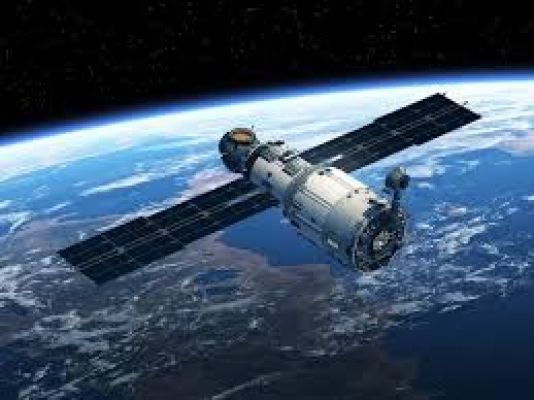
A lot is happening in the satellite internet space in India right now, and it would be no exaggeration to call it the next big thing after the 5G services rollout. Several communication bigwigs, from Elon Musk’s Starlink to Mukesh Ambani’s Reliance Jio, have made strides to offer satellite-based internet services to remote corners of the country where cable and fibre internet are yet to reach. A satellite internet connection provides high-speed internet connections using satellites orbiting in space.
The frontrunner
In September, Hughes Communications India, in partnership with the Indian Space Research Organisation (ISRO), announced the launch of its first high throughput satellite (HTS) broadband internet service in India. Hughes Communications India is a joint venture entity between Hughes Network Systems, US, and Sunil Mittal’s Bharti Airtel. The launch is aimed at offering satellite internet services in India’s remote locations.
For the service, it will use ISRO’s geosynchronous satellite (GSAT)-11 and GSAT-29. The Indian space research body launched the two satellites in 2018, intending to offer higher bandwidth satellite connectivity. Following the launch, K Sivan, then ISRO chairman, said the satellite is capable to offer a peak data bandwidth of 14 Gbps through satellite networks. The service launched by Hughes Communications India reportedly can offer internet connectivity bandwidth of up to 100Mbps. Notably, Bharti Airtel in October became the first company to launch 5G services in India.
In the fray
Joining the still nascent satellite internet space in the country is Reliance Jio, which announced its foray into this space in February this year. For this, it has partnered with Luxembourg-based SES, under the name Jio Space Technology Limited. In September, the company received the department of telecommunications’ (DoT) nod to start high-speed broadband-from-space services in the country.
For more than a decade, social media platforms have seen extreme highs when it comes to advertisement revenues and user growth but are things the same? Elon Musk is capable of thinking out of the box and may change the social media game. Let’s look at how the game can play out.
Musk will need to take a hard look at the bottom line and come up with ways to make investors happy as well as pay the money Twitter owes banks. Expect Twitter to promote its Twitter Blue package.
The problem at hand: He has to deal with staff revolt and many may leave as soon as he makes his presence felt. The top management is undergoing a massive change.
Hope floats: Now that Twitter will stop being a publicly-traded company, he won’t have pressures of the market. He can come up with ways to push Twitter Blue subscription and offer an out-of-the-box cure for the platform, which has rarely turned in big profits.
Meta
Meta has spent huge amounts of money in its rebranding as well as investing in the so-called metaverse. Its Oculus dreams around the metaverse can best be described as an emerging technology and it won’t make investors happy in the short run. Young users in the West are spending more hours on TikTok and the loyalty of creators seems to have shifted. Further, Meta has also lost billions of dollars in advertising revenue because of changes Apple made in 2021 to its mobile operating system, which made it harder for apps to track users across the Internet.
The problem at hand: Control costs, win back users from TikTok.
Hope floats: Mark Zuckerberg has always managed to make a comeback and the company’s future technology looks promising.
Snapchat
The platform continues to be attractive among the youth but its advertising business has taken a hit and the company recently laid off roughly 20 per cent of its workers. Snapchat too has been a victim of Apple’s privacy changes but Snap is not complaining as much as Meta.
The problem at hand: Rebooting its ad business.
Hope floats: Youngsters are still using Snapchat and daily active users continue to grow.
Elon Musk has taken charge of Twitter after months of uncertainty over whether or not his $44b acquisition of the social media platform would go through. Soon after taking over he tweeted “The bird is freed” and, as expected, he started clearing out the house, with some top Twitter executives getting fired.
The people who were let go include chief executive Parag Agrawal; chief financial officer Ned Segal; Vijaya Gadde, head of legal policy, trust, and safety; and general counsel Sean Edgett.
A few hours before the deal was sealed before the October 28 deadline, Musk said in a statement: “The reason I acquired Twitter is because it is important to the future of civilisation to have a common digital town square, where a wide range of beliefs can be debated in a healthy manner, without resorting to violence.”
The self-described “free speech absolutist” has said that he wants to make the social media platform an accommodating place for all types of commentary and that he would “reverse the permanent ban” of former US President Donald J. Trump from the service.
Now that the 51-year-old has taken the company private, he does not need to regularly answer shareholders and can make changes to the service as and when he wants.
Business Insider reports that the executives who were fired have received handsome payouts — Agrawal got $38.7 million, Segal got $25.4 million and Gadde got $12.5 million.
The Tesla CEO originally offered to buy Twitter in April, then he tried to back out in May and then again changed his mind on October 4, filing a letter with the Securities and Exchange Commission affirming his commitment to the original deal.
It remains to be seen whether he would be successful in improving the company’s bottom line or reinventing the Twitter wheel. Working in favour of Musk is his track record, from PayPal to Tesla and SpaceX, the tech billionaire has had a hand in building some of the world’s most valuable companies. With Musk at the helm, it can be a fresh start for Twitter.
Elon Musk has finally bought Twitter after six months of extreme mood swings. Now it’s his turn to live up to the text that he had sent to former Twitter CEO Parag Agrawal in April: “I just want Twitter to be maximum amazing.” Over the last six months, the 51-year-old has given us some clues as to how he may change the platform.
Free speech
Elon Musk is very clear as to where he stands on what is discussed on Twitter. He has indicated that he would reinstate former US President Donald Trump to the platform and wants to reduce Twitter’s content moderation to allow everything that doesn’t violate local laws. (Trump has made it clear he wants to stick to his platform, Truth Social.) Musk describes himself as a “free speech absolutist” and has said Twitter should be more cautious about removing tweets or banning users.
A ‘common digital town square’
Advertisers are concerned that Musk may allow Trump back on the platform, which is a no-no for many brands. In a message to advertisers on Twitter earlier this week, Musk said he was buying the company to “have a common digital town square” and added that Twitter “cannot become a free-for-all hellscape, where anything can be said with no consequences”. He also said that Twitter must be “warm and welcoming to all”.
Twitter has to be careful about its relationship with brands because the platform is taking on $13 billion in debt in the deal. The online ad markets already are shaky with Snap Inc. and Alphabet Inc. posting lower-than-expected revenue results for the September quarter.
Envisioning Twitter as the super-app WeChat
In the past Musk has tweeted: “Buying Twitter is an accelerant to creating X, the everything app.” Here X refers to so-called “super apps” which are popular in China and other parts of Asia, pioneered by the likes of Chinese technology giant Tencent. Everyone wants to have a replica of WeChat. Mark Zuckerberg wants WhatsApp to be that one super app and so does Evan Spiegel’s Snapchat.
WeChat, run by Tencent, is the biggest super app in the world, with over a billion users. Yes, it’s that big and anyone planning to move to China should know about the app. WeChat is not just a messaging app; you can do mobile banking, pay for things online or in store by scanning a barcode, post videos, do online shopping and what not.
WeChat has been on Musk’s mind for a long time. The Tesla CEO expressed admiration for the Chinese app, calling it “great” during a town hall with Twitter employees in June. He said there is no WeChat equivalent outside of China. The problem for Musk would be regulators.
A little bit of Signal
Musk is a fan of the Signal messaging app. Former Twitter CEO Jack Dorsey, earlier this year, texted Musk that the future of Twitter should involve a protocol run by the foundation. “A bit like what Signal has done. Otherwise you have surface area that governments and advertisers will try to influence and control,” Dorsey wrote. Musk too has in mind a few of Signal’s features. “Trying to figure out what to do with Twitter DMs. They should be end to end encrypted (obv). Dunno if better [sic] to have redundancy with Signal or integrate it,” he texted Brian Acton, Signal’s co-founder and executive chairman.
Choose your algorithm
He has made his thoughts known about the algorithm Twitter needs to have — an endless feed like TikTok and at the same time, he also wants users to have the option to switch to the reverse-chronological feed and said that “you are being manipulated by the algorithm in ways you don’t realise”. He wants to “open-source” the algorithm, allowing others to make new ones.
Big on Twitter Blue
Twitter Blue is the premium subscription feature of the platform and comprises paid membership. Musk wants to give this category a push. He pitched investors a plan that involved getting 69 million Blue subscribers by 2025 and 159 million by 2028. He wants to cut advertising to less than 50 per cent of Twitter’s revenue.
Creator-friendly platform
Why should TikTok have all the fun?! Users probably don’t want to see Twitter being turned into a video platform but Musk is interested in it and has spoken to colleagues about how to make video advertising work on Twitter and how to bring video creators over from other platforms. The Verge reported Vivien Hantusch, a longtime Musk fan who now works for him in Germany, texting to Musk: “From a social perspective — Twitter allowing for high-quality video uploads (1080p at a minimum) & adding a basic in-app video editor would have quite a big impact I think. Especially useful for citizen journalism & fun educational content. Might even help Twitter regain market share lost to TikTok.” Musk’s response: “Agreed.” He then added: “Twitter can’t monetise video yet, so video is a loss for Twitter and for the those [sic] who post.”
Some transparency… in a way
Buying Twitter means that Musk won’t have to answer shareholders. At the same, he could be the person who will need to offer more transparency over how online conversations are moderated. At the moment, moderators make questionable calls and it’s almost impossible to know why Twitter takes down certain posts. Making Twitter’s inner workings transparent may help build the public’s confidence.
More scrutiny from Washington
Elon Musk has tried to offer unsolicited peace plans for Taiwan and Ukraine, antagonising the leaders of those countries and giving Washington a new headache. Further, he irritated some Pentagon officials by announcing he didn’t want to keep paying for his private satellite service in Ukraine but then made a U-turn. Many in Washington see Musk as extremely powerful as well as reckless. In January, he called US President Joe Biden “a damp sock puppet in human form” after Biden said, “Companies like GM and Ford are building more electric vehicles here at home than ever before”, without mentioning Tesla, the world’s biggest EV maker.
What does a billionaire want? A social media platform. The world’s richest man now owns Twitter, the social media platform used by politicians, businessmen and celebrities around the world. But he is not alone.
Donald Trump
After being banned from various social media platforms, former US President Donald Trump has invested in Twitter clone called Truth Social. It markets itself as a platform that “encourages an open, free, and honest global conversation” but is primarily a platform for Trump. Trump’s use of Twitter redefined politics, letting him sidestep mainstream media to control the political narrative. Permanently banned from Twitter, Trump is trying to drum up conversations on Truth Social.
Kanye West
Kanye West has announced that he is buying the rightwing social network Parler for an undisclosed sum. George Farmer, the chief executive of Parler's parent company, Parlement Technologies, said: “This deal will change the world, and change the way the world thinks about free speech. Ye is making a groundbreaking move into the free speech media space and will never have to fear being removed from social media again.” What remains to be seen is whether Kanye is still a billionaire after Adidas and several other brands decided to cut ties with the rapper for his antisemitic comments.
Writer-MATHURES PAUL
Writing in the journal BioScience, an international coalition led by Oregon State University researchers says in a report published today that the Earth’s vital signs have reached “code red” and that “humanity is unequivocally facing a climate emergency.”
In the special report, “World Scientists’ Warning of a Climate Emergency 2022,” the authors note that 16 of 35 planetary vital signs they use to track climate change are at record extremes. The report’s authors share new data illustrating increasing frequency of extreme heat events, rising global tree cover loss because of fires, and a greater prevalence of the mosquito-borne dengue virus. Further, they note that atmospheric carbon dioxide levels have reached 418 parts per million, the highest on record.
William Ripple, a distinguished professor in the OSU College of Forestry, and postdoctoral researcher Christopher Wolf are the lead authors of the report, and 10 other U.S. and global scientists are co-authors.
“Look at all of these heat waves, fires, floods and massive storms,” Ripple said. “The specter of climate change is at the door and pounding hard.”
The report follows by five years the “World Scientists’ Warning to Humanity: A Second Notice” published by Ripple and colleagues in BioScience and co-signed by more than 15,000 scientists in 184 countries.
“As we can see by the annual surges in climate disasters, we are now in the midst of a major climate crisis, with far worse to come if we keep doing things the way we’ve been doing them,” Wolf said.
“Climate change is not a standalone issue,” said co-author Saleemul Huq of Independent University Bangladesh. “To avoid more untold human suffering, we need to protect nature, eliminate most fossil fuel emissions and support socially just climate adaptations with a focus on low-income areas that are most vulnerable.”
The report points out that in the three decades since more than 1,700 scientists signed the original “World Scientists’ Warning to Humanity” in 1992, global greenhouse gas emissions have increased by 40%.
“As Earth’s temperatures are creeping up, the frequency or magnitude of some types of climate disasters may actually be leaping up,” said the University of Sydney’s Thomas Newsome, a co-author of the report. “We urge our fellow scientists around the world to speak out on climate change.”